The two peoples of World Beyond Gods are not human. So their world is not human either, and it is not Earth. This post walks through what we have set down: two lands, each made for the people who live in it, under one sky that stopped turning when the gods left.
Two peoples who are not human
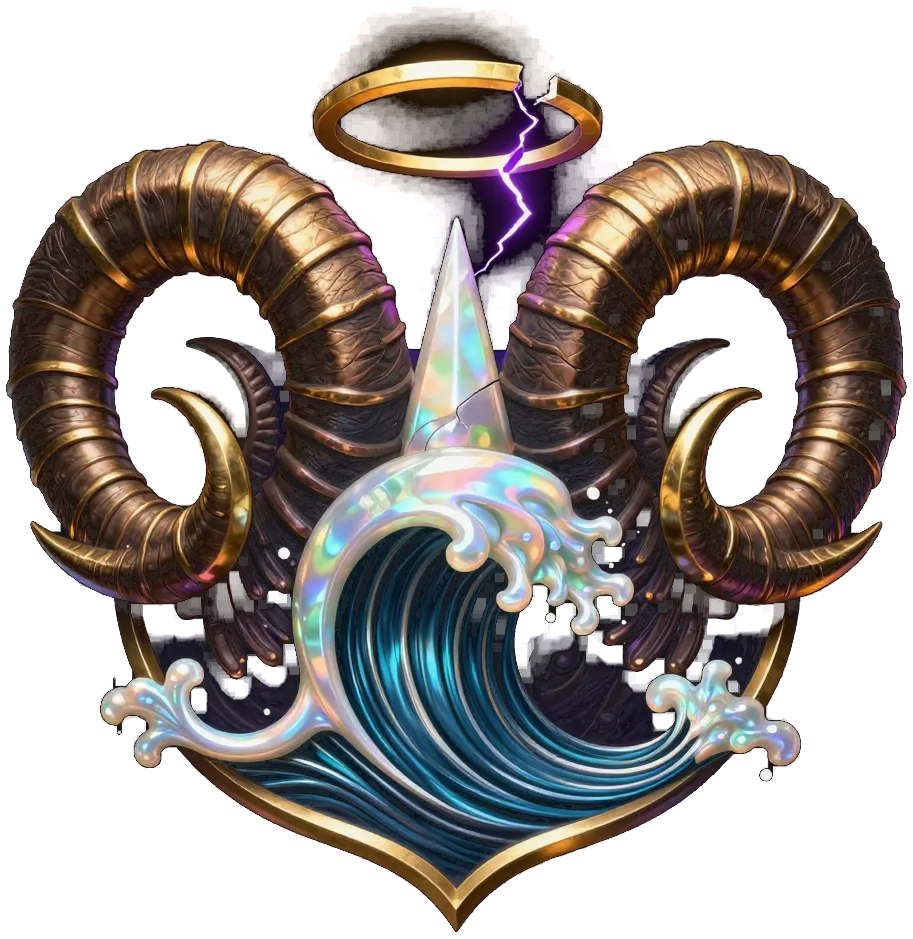
The Hornbound, who call themselves the Vael, are broad and terracotta-skinned, with spiralling ram horns ringed in brass, short lower tusks, braids and beards. They hold the highlands of the west.
The Tidecrowned, who call themselves the Hushborn, are tall and pale, scaled in nacre, with translucent fins fanning behind the jaw and over the skull. They never drown, and they do not breathe. They hold the coast of the east and south-east.
You can tell them apart at eighty metres, broad and horned against tall and finned, and you can tell their lands apart from two kilometres away.
The Hornbound highlands
A warm plateau of banded ochre rock, cut by slot gorges and stepping down eastwards in broad terraces. Antler-trees, with flattened tines and no leaves, stand alone against an amber sky. Ridged grass, ochre with rust tips, is combed into waves by the Ember wind from the west. Amber streams run through the gorges, and small copper-green tarns sit in the hollows of the crests.
Here the land is warm, heavy and round. The Hornbound grow their halls from the bones of the land: paired rib arches rising out of the ground, hide stretched between them like sails, amber resin for windows, and horn spires ringed in brass. Their town plan is a circle: halls round a hearth court, dwellings round the halls.
The Tidecrowned coast
A low, drowned coast of pale chalk flats that the tide covers and bares, lagoons behind coral bars, and black basalt stacks crusted in pearl standing in the shallows. Kelp forests sway on the wet flats, light falling through their ribbons in bands. Pools hold still mirrors of the pale sky, and the sea is always in view.
Here everything is tall, cool and spiralling. The Tidecrowned grow their towns from the sea: spiral-shell towers with a ramp winding round the outside, coral terraces that climb from the water, sea-glass windows, and streets that are shell ramps the tide fills and empties.
Grown, not built
Neither land has an oak, a pine, a horse or a stone cottage in it. There is no timber, and nothing is cut square. Every creature is new: six-legged loamstriders herded across the terraces, moth-winged ashwings rising from the grass, shellbearers carrying spiral shells over the flats, drift-rays sailing high above the sea.
Two held hours, and the Seam
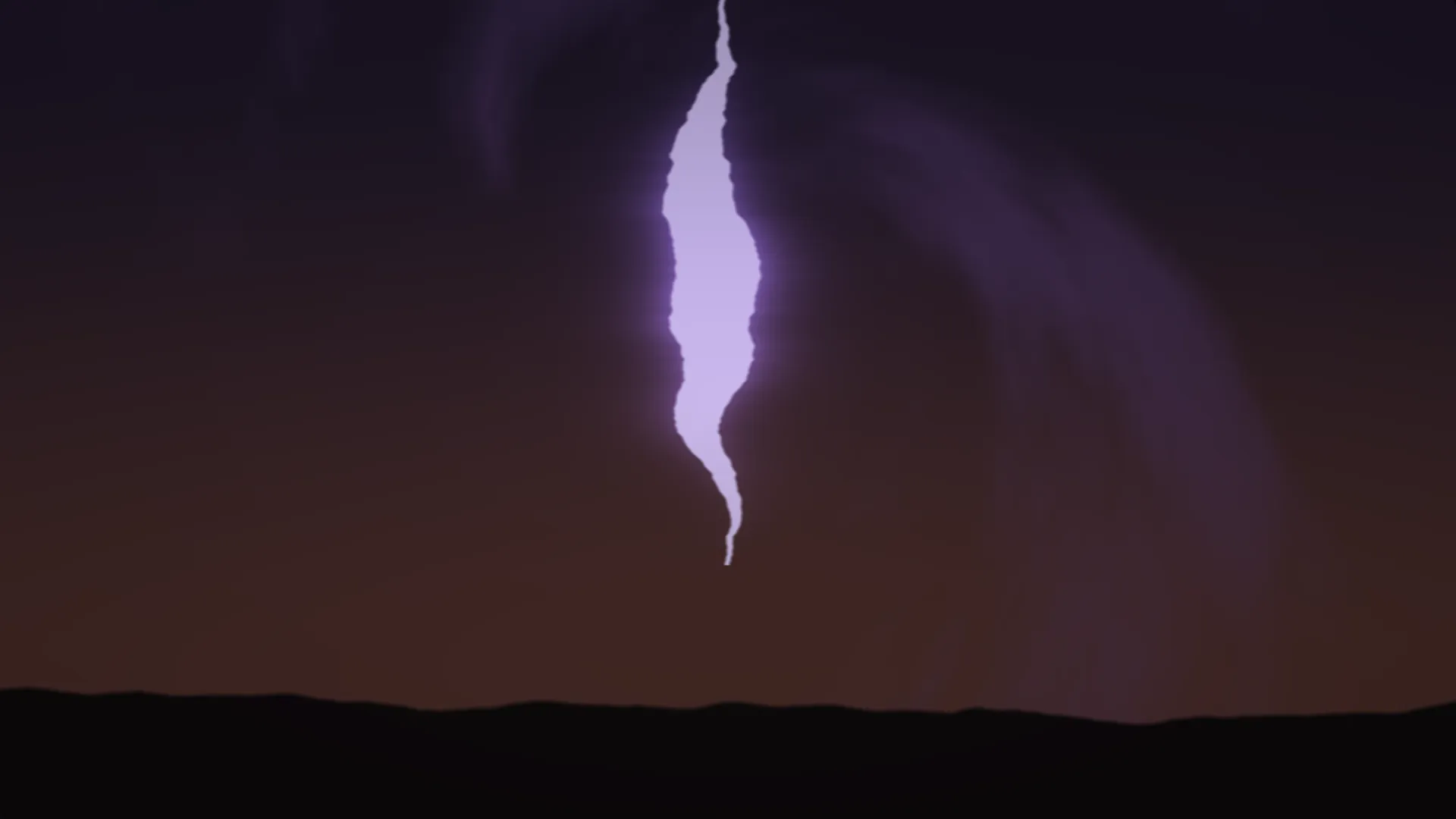
When the gods left, the sky stopped turning, and the sun stopped at a different hour over each land. The highlands live in the Long Ember, a low late-afternoon sun with long shadows and dust in the air. The coast lives in the Pale Noon, a high cool sun behind a veil of sea cloud, with short soft shadows and wet light.
Where the two lands meet, along the Brackwater river, lies the Seam. Walk through it and the shadows swing round and shorten, the sky turns from amber to pearl, and the air from dust to salt. It is the only place in the open world that looks like dusk.
One sky: the Girdle and two moons
Both lands share one sky. A thin ring, the Girdle, arches across the south, cream-gold with a dark gap line along it. Hesk, the pale moon, hangs in the north-east, bone-white and marked with shapes like horns. Murr, the small moon, is a rust-red dot beside the ring in the south-west. Like the sun, they never move. Only the clouds and the weather do.
What comes next
We are now building the two starting valleys for real, Emberfold for the Hornbound and Saltglass Reach for the Tidecrowned, so both peoples start in their own land in the first slice: the ground and the held light first, then the rest. The first landscapes of the two lands will be posted here and on the media page as they are ready.